



A missed clause or a vague agreement can slowly turn into a serious business problem. Many disputes, delayed payments, and strained partnerships begin with something as simple as unclear terms or overlooked details in a contract.
Contracts act as the foundation of every professional relationship. They clearly outline who is responsible for what sets expectations and provide a sense of security for everyone involved. From hiring employees to working with vendors or forming partnerships, every important business interaction relies on well-structured agreements.
The real complexity begins after the contract is signed. Without proper tracking, timely reviews, and organized documentation, businesses often face compliance risks, financial losses, and operational delays. This is where contract lifecycle management services support businesses by bringing structure and visibility to every stage of a contract.
Understanding the different types of business contracts and knowing how to manage each one effectively helps organizations build stronger relationships, reduce risks, and operate with greater confidence.
What are the Types of Contracts? A Complete Breakdown
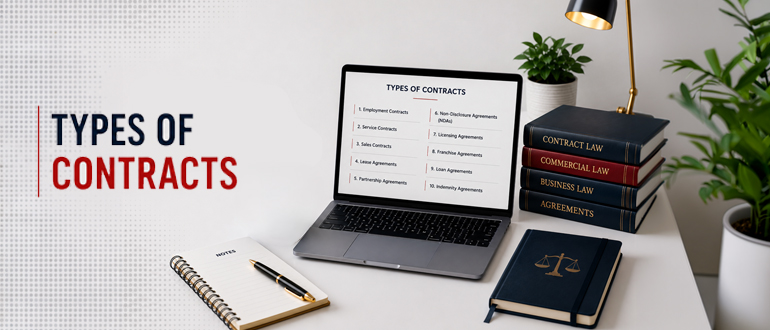
Every business relies on different types of contracts depending on the relationship, purpose, and level of risk involved. Understanding these categories helps in choosing the right structure and managing each agreement more effectively.
1. Business & Commercial Contracts
These contracts support day-to-day operations and revenue-generating activities.
- Sales & Purchase Contracts
Used when goods or products are exchanged between buyers and sellers. They define pricing, delivery timelines, payment terms, and quality expectations.
Management tip: Track delivery milestones and payment schedules closely to avoid disputes. - Service Agreements
Applicable when one party provides services to another, such as consulting, marketing, or IT support. These contracts outline scope, timelines, and performance standards.
Management tip: Clearly document scope changes to prevent misunderstandings later. - Partnership Agreements
Formed when two or more parties collaborate to run a business. They define profit sharing, roles, and decision-making authority.
Management tip: Regularly review roles and responsibilities as the business evolves. - Joint Venture Agreements
Created for specific projects where businesses collaborate for mutual benefit without forming a permanent entity.
Management tip: Define exit terms and responsibilities from the beginning.
2. Employment & HR Contracts
These contracts govern relationships between businesses and individuals working for them.
- Employment Contracts
Outline job roles, compensation, benefits, and company policies. They ensure clarity between employer and employee.
Management tip: Keep contracts updated with policy or role changes. - Non-Compete Agreements
Restrict employees from joining competitors or starting similar businesses within a specific time and region.
Management tip: Ensure terms are reasonable and legally enforceable. - Freelancer / Independent Contractor Agreements
Used when hiring external professionals for specific tasks or projects.
Management tip: Clearly define deliverables, timelines, and payment terms.
Legal & Compliance Contracts
These contracts protect sensitive information and intellectual property.
- Non-Disclosure Agreements (NDAs)
Prevent the sharing of confidential information between parties. Common in partnerships and hiring.
Management tip: Define what qualifies as confidential information in clear terms. - Licensing Agreements
Allow one party to use another’s intellectual property under defined conditions.
Management tip: Monitor usage rights and renewal timelines. - Indemnity Agreements
Protect one party from financial loss caused by another party’s actions.
Management tip: Clearly outline liability limits and conditions.
Real Estate & Property Contracts
These contracts deal with property transactions and usage rights.
- Lease Agreements (Residential & Commercial)
Define terms for renting property, including duration, rent, and maintenance responsibilities.
Management tip: Track renewal dates and escalation clauses. - Purchase Agreements
Used in buying or selling property, outlining terms, conditions, and payment structures.
Management tip: Ensure all legal and financial conditions are verified before execution.
Government & Procurement Contracts
Common in public sector projects and large-scale procurement.
- Fixed-Price Contracts
The total cost is agreed upon in advance, regardless of actual expenses.
Management tip: Monitor project scope carefully to avoid cost overruns. - Cost-Plus Contracts
The buyer agrees to cover project costs along with an additional fee or profit margin.
Management tip: Maintain detailed cost records for transparency.
Each contract type comes with its own level of complexity and risk. Managing them effectively requires structured tracking, timely reviews, and clear documentation, areas where contract lifecycle management services help businesses stay organized and reduce uncertainty.
What Is Contract Management and Why Does It Matter?
Contract management is the process of handling contracts from creation to closure, ensuring that every term, obligation, and deadline is clearly tracked and fulfilled. It helps businesses stay organized, reduce risks, and maintain strong professional relationships by keeping agreements aligned with real-world operations.
When managed properly, contracts become reliable business assets rather than scattered documents. With the support of contract lifecycle management services, companies gain better visibility, avoid missed opportunities, and keep compliance in check while poor management often leads to financial losses, missed deadlines, legal risks, and unnecessary disputes.
Illustration: Contract Lifecycle Stages and Business Impact
| Stage | What Happens Here | Why It Matters |
| Creation & Drafting | Terms, clauses, and responsibilities are defined | Builds a clear foundation |
| Negotiation | Parties refine terms and expectations | Aligns both sides early |
| Approval | Internal or legal review takes place | Ensures accuracy and compliance |
| Execution | Contract is signed | Activates the agreement |
| Monitoring & Compliance | Obligations, timelines, and performance are tracked | Prevents missed commitments |
| Renewal / Amendment | Updates or extensions are made | Keeps contracts relevant |
| Expiration / Closure | Contract is completed or terminated | Avoids risks and loose ends |
How to Manage Each Type of Contract Effectively
Managing contracts effectively requires more than just signing documents—it involves maintaining control, clarity, and consistency throughout the entire lifecycle. A well-managed contract ensures that expectations are met, risks are minimized, and business relationships remain smooth.
By following a structured approach, businesses can avoid common issues like missed deadlines, unclear obligations, or compliance gaps.
Step 1: Draft with clarity
Start by creating contracts with clearly defined terms. Every important detail include scope of work, deliverables, timelines, pricing, and responsibilities should be written in simple and precise language. Ambiguity at this stage often leads to disputes later, so clarity is critical from the beginning.
Step 2: Review and approve
Before finalizing, ensure the contract goes through proper internal and legal review. This step helps identify risks, correct inconsistencies, and confirm that the agreement aligns with company policies and regulatory requirements.
Step 3: Execute and centralize
Once approved, the contract is signed and becomes active. It should then be stored in a centralized system where it can be easily accessed, rather than scattered across emails or folders. Organized storage saves time and reduces confusion.
Step 4: Track obligations and deadlines
After execution, active monitoring becomes essential. Keep track of key dates such as payment schedules, delivery timelines, and renewal deadlines. Missing these can directly impact revenue and operations.
Step 5: Monitor performance
Regularly assess whether all parties are meeting their commitments. This includes checking service quality, delivery standards, and agreed milestones. Early identification of issues helps prevent larger problems.
Step 6: Update when needed
Business needs often evolve, and contracts should reflect those changes. Amend agreements when there are updates in pricing, scope, or responsibilities to ensure everything stays aligned.
Step 7: Manage renewal or closure
As the contract nears its end, review its performance and decide whether to renew, renegotiate, or close it. Taking timely action here helps maintain continuity and avoids last-minute pressure.
Following these steps consistently helps businesses stay organized, reduce risks, and maintain stronger control over every agreement.
What are the Contract Management Best Practices (2026)
As businesses scale and deal with increasing volumes of agreements, contract management requires a more structured and proactive approach. Modern best practices focus on consistency, visibility, and risk reduction, helping organizations stay in control at every stage of the contract lifecycle. Adopting the right practices not only improves efficiency but also strengthens compliance and decision-making, areas where contract lifecycle management services provide significant support.
1. Standardization
Using standardized templates and clauses ensures consistency across all contracts. It reduces drafting time, minimizes errors, and makes it easier to review agreements quickly. Standardization also helps teams follow a uniform structure, which improves clarity and reduces legal risks.
2. CLM Software
Contract Lifecycle Management (CLM) software centralizes all contracts in one place, making them easier to create, track, and manage. It provides automated alerts for key dates, streamlines approvals, and improves collaboration across teams. This reduces manual effort and ensures nothing important gets overlooked.
3. Compliance Reviews
Regular compliance checks help ensure that contracts align with legal regulations, company policies, and industry standards. Reviewing contracts periodically also helps identify potential risks early and keeps agreements updated with changing laws or business requirements.
4. Dispute Resolution Clauses
Including clear dispute resolution terms in contracts helps handle conflicts efficiently. Defining processes such as mediation or arbitration in advance prevents confusion and reduces the chances of lengthy legal battles.
5. Renewal Tracking
Tracking renewal and expiration dates is essential to avoid missed opportunities or unwanted contract extensions. Timely reminders allow businesses to renegotiate terms, adjust pricing, or exit agreements smoothly based on current needs.
Common Contract Management Mistakes to Avoid
Even well-drafted contracts can create problems when they are not managed properly. Small oversights tend to build up over time, leading to financial loss, compliance issues, and strained business relationships. Avoiding these common mistakes helps businesses stay in control and get full value from every agreement.
- Unclear or vague contract terms
Ambiguity in scope, timelines, or responsibilities often leads to misunderstandings. Contracts should use precise language so every party knows exactly what is expected. - Poor document organization
Storing contracts across emails, folders, or multiple systems makes them difficult to track and retrieve. A centralized system ensures quick access and better control. - Missing key dates and deadlines
Overlooking renewal dates, payment schedules, or deliverable timelines can result in penalties or lost opportunities. Consistent tracking is essential to stay on schedule. - Lack of regular reviews
Contracts should be reviewed periodically to ensure they still align with business needs. Ignoring this can leave outdated terms in place, creating operational gaps. - Ignoring compliance requirements
Failure to align contracts with legal or regulatory standards can lead to serious consequences. Regular compliance checks help reduce this risk. - Weak approval processes
Skipping proper internal or legal review increases the chances of errors and unfavorable terms. A structured approval workflow ensures accuracy and accountability. - No visibility into contract performance
When businesses don’t monitor whether obligations are being met, issues remain unnoticed until they escalate. Tracking performance helps maintain accountability. - Delayed renewals or last-minute actions
Handling renewals at the last moment limits negotiation power and creates unnecessary pressure. Planning ahead allows better decision-making.
Avoiding these mistakes becomes much easier with structured processes and contract lifecycle management services, which bring organization, visibility, and consistency to the entire contract lifecycle.
Tools & Software for Contract Management
Managing contracts manually becomes difficult as businesses grow. Dedicated tools simplify the process by improving visibility, reducing errors, and keeping everything organized in one place.
- Ironclad
A popular contract lifecycle management platform that helps automate drafting, approvals, and tracking. It is known for its workflow automation and ease of collaboration across teams. - Clio
Primarily designed for legal professionals, Clio helps manage documents, cases, and contracts efficiently. It is useful for businesses that work closely with legal teams or require structured documentation. - DocuSign
Widely used for securing digital signatures; DocuSign speeds up contract execution and reduces dependency on physical paperwork. It also offers basic tracking and document management features. - HyperStart
A growing CLM platform focused on automation, contract analytics, and lifecycle tracking. It helps businesses manage contracts from creation to renewal with better visibility and control.
Using the right tools, along with contract lifecycle management services, help businesses streamline operations, reduce manual effort, and maintain consistency across all agreements.
Conclusion
Contracts sit at the core of every business relationship, shaping how companies operate, collaborate, and grow. From understanding different contract types to managing them effectively, a structured approach helps reduce risks, improve clarity, and strengthen long-term partnerships.
When contracts are handled with consistency and proper tracking, businesses gain better control over their operations and avoid unnecessary disruptions. This is where contract lifecycle management services make a meaningful difference, bringing organization, visibility, and efficiency to every stage of the contract journey.
If you’re looking to simplify your contract processes and reduce risk, Legal Support World offers reliable solutions designed to support every stage of your contract lifecycle with precision and expertise.
